

Cry for Those Widowed by ISIS: Yazidi Women Find Strength in Motherhood
Yazidi widows face solitude and restricted freedoms as single women, but find courage and strength to protect their children.
1.In a barren camp in north Iraq a group of Yazidi women from Sinjar discuss the daunting task of being single female heads of household in a patriarchal society.
As is the case for countless Iraqi widows, their husbands were violently killed by the Islamic state (ISIS) in 2014 when the militants took control of the Sinjar region, once home to Iraq's largest Yazidi population.
Over 5,000 Yazidi men were estimated to have been killed while thousands of women and children were abducted and sold among residents of ISIS' so-called caliphate.
Today their future is uncertain - marred by financial insecurities, the stigma of being single and restricted freedom of movement.
2.As women without husbands they cannot leave their homes without a male relative to accompany them, making them unemployable and therefore unable to provide for the family.
The unofficial camp where the women live is a spillover from the official Khanke camp nearby.
Unlike the U.N.-run camp, this cluster of tents is not gated, nor is there any security, highly increasing the women's vulnerability.
In spite of the challenges ahead and the solitude that comes of losing a husband, all seven women remained resilient and spoke of a common source of strength: their children.
3.When ISIS attacked he asked me to take my sons and daughters and go, he stayed to fight. I wanted to stay but I was worried about my children, so when he asked, I did it - he was killed that day.
Two days later our relatives brought his body back.
He was a very gentle and brave man with a kind heart. I'm very proud of him because he faced the people who wanted to take his honor.
It's very different for me since he left; I'm not a free woman like when my husband was with me. People don't visit me as much anymore and my movement is restricted.
Pakiza Melhem, 35, married her husband when she was just 12 years old. She wears black in mourning.
4.I wish I was the one who was shot that day because this life is hard to face without a husband - but my children help me go on. I stand by them and they stand by me.
[This situation] would be easier for him because he'd be able to remarry - I have nine children, I can't remarry. I would have to leave the children with my husband's family.
I will change [my mourning clothes] when I see my children get their own lives, grow and marry - when I'm happy again I will change.
5.We all fled to the mountain but he refused to come because he wanted to stay behind and take care of the cattle.
After two days I spoke to him on the phone, I asked him to come to the mountain. He was preparing to leave, but ISIS came to the house and forced him out, they told him to convert but he refused and they shot him.
Shireen Qassem Khudaida, 60, is a no-nonsense kind of woman - a result of having raised 13 children. She is matter-of-fact about the problems that she faces.
6.One of my sons is a Peshmerga [Kurdish military] but he isn't getting a salary, another son used to have a job but now has back problems and can't work.
We used to depend on one million Iraqi Dinar ($900 US) from the government but that's finished too.
7.Shireen Qassem Khudaida cluches a photograph of her children who she believes are still being held captive by ISIS militants.
8.My husband closed up the house and tried to find cars in which to place us so that we could escape to the mountain. We stayed on the mountain for one week.
It was very hard for me, many times I wished I was with my husband wherever he may be. For those who have lost their husbands, it would be better to have lost themselves.
When I think of him and how he left us I want to leave everything, but I think of my daughters and I can't leave them.
Fatuma Aziz, 21, lost her husband when she was only 19. While she fled to Mt. Sinjar with her two daughters, he stayed behind to protect the village. They have not heard from him since.
9.I need financial support, I sell the food the government gives us and use the cash for other needs like milk and clothes for my daughters.
What keeps me going are my husband and daughters, I hope my daughters will be able to see their father again - I think that he will come back.
10.When ISIS surrounded our village they took us to a chicken farm, there they separated us [women] from the men. They took the men away and that's when we heard the gunshots.
I knew they had killed them, the bullets didn't make the same noise a bullet makes when you shoot it in the air. [Then] I saw his dead body.
I ran away, hid in a village for three days and then climbed Mt. Sinjar.
Many things have changed [since then]. It's hard, he supported me, protected us and raised the children. When he was at home many people would come and visit but now that he's not here, I am alone. I am lonely.
Mayan Badal Khalaf, 45, and her husband were married for 27 years and had nine children. In August 2014, the couple was captured by ISIS and separated.
11.I am strong but my heart is broken. My strength comes from my children, if I want to support them I have to be strong. I miss him but I do it alone, I tell my children: this is life.
It's the simple things - like when I need to buy something from the market, now there is no one to do it and I cannot go by myself. I have to take a relative to do the simplest of things.
I wish I had a salary to provide for my family, if I did I wouldn't let my daughters work. I worry because they could be attacked by men, but they have to work because we are in need.
12.At 5am we ran to the mountain, I carried my youngest girl all the way to the Syrian border - I thought she was going to die of thirst or starvation.
We stayed on the mountain for seven days, sleeping in the open. I lost my mother there.
As an individual I was very strong before, but after what happened in Sinjar and the fears that we face I am scared inside, not for myself but for my children.
Airo Qassem Hayder was widowed in January 2014. Her husband, a soldier, was killed while on patrol in Mosul city. Seven months later she was forcefully displaced from her village by ISIS militants.
13.Sometimes I feel like there is no life after what happened [to us]. But I made a promise to my husband's soul: that I would take care of our children. During the day I take care of them, but at night when I go to sleep there are tears on my face.
It's a big challenge for a single woman to raise four children, [unlike a man] a woman can't find a job to support her family. If I was a man I would be married again and continuing with my life, as a woman I have lost my life - but despite that, I am raising four children on my own.
The thing that makes me strong are my children. My greatest hope is to see my children go to school, see for them a future that is better than what me and my husband had.
14.My husband sent us away [to Mt. Sinjar] with other people and he stayed behind. He called us and said he was on his way to us - but five minutes later they caught him. We never heard from him again.
I don't go around by myself because people talk, it is shameful to go around alone. They'll say: at least she could take a man with her. But there is no one that can help because they are all busy with their own families.
It's unfair because there are so many women who don't have men to accompany them but they have to stand on their own two feet and provide for their families.
Layla Murad Yousef, 38, seldom ventures outside her tent alone in fear that her community might consider her immoral. Her husband's body has yet to be found, but he was likely killed when ISIS captured their village almost two years ago.
15.Each morning my son kisses me on both cheeks and says: it's one for your and one for dad.
I depend on my daughters financially. I've only two sons and they are both too young [to work].
Many people have told me to leave the country, I tell them I can't because I still feel that my husband will come back. I still feel that one day God will send him back to us, we've not lost hope.
16.My husband stayed behind to help open the way to the mountain - I rejected going to Mt. Sinjar without him but he forced me and promised he would come back.
We were together for four years, when I went to the mountain was the first time he ever forced me to do something - he was a good man.
Khansa Khudida Ali, 20, lives with her mother in law. Both women have lost everything and lean on each other for comfort.
17.Now I've no freedom to move, if I want to go alone to places it's shameful.
I need him to stand by me to bring up the children together, my daughter needs her father. He was the man that every girl wants as a father.
http://www.nbcnews.com/slideshow/widowe ... od-n569466

Facebook

Search

Welcome To Roj Bash Kurdistan

Yazidi UPDATES genocide has occurred and is ongoing
Re: Yazidi UPDATES and How to Donate to Yazidis by TEXT
 Author: Anthea » Sat May 07, 2016 3:05 pm
My Name Is KURDISTAN And I Will Be FREE
-

Anthea - Shaswar

- Donator

- Posts: 31601
- Images: 1151
- Joined: Thu Oct 18, 2012 2:13 pm
- Location: Sitting in front of computer
- Highscores: 3
- Arcade winning challenges: 6
- Has thanked: 6019 times
- Been thanked: 746 times
- Nationality: Kurd by heart
Re: Yazidi UPDATES and How to Donate to Yazidis by TEXT
Author: Anthea » Sun May 08, 2016 8:46 pm
Yazidi Woman, Disfigured by Mine After Escaping IS, Awaits Aid
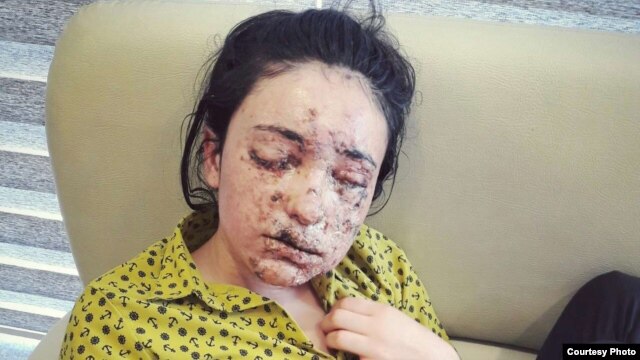
When Lamiya Hachi Bashar escaped the house of an Islamic State fighter in Iraq in mid-April, she thought months of enslavement and IS terror were finally over.
But on her way to freedom outside the Iraqi town of Hawija, Bashar, 18, lost her sight in a blast from a land mine explosion. Her face was severely disfigured.
“Her right eye is pretty much gone, but her left eye can recover,” said Kurdish doctor Husain Bahrari, who treated her. “She also suffers from extensive facial laceration.”
IS violence
Bashar, one of thousands of Yazidis who have suffered under systematic violence by IS, is facing a bleak future. Her doctor told VOA that her complex injuries require treatment that is not available in Iraq.
“There needs to be a plastic surgery quickly to avoid scars that are unrecoverable,” Bahrari said. “A young girl her age needs that.”
But Bashar is waiting to get an entry visa to Germany and is facing uncertainty about who is going to pay for medical procedures, a German charity attempting to help her said.
She's 'traumatized'
“We are trying to get her to Germany, but the visa process is slow and we’re limited on resources,” said Mirza Dinnayi, head of the German-based Air Bridge Iraq. “The poor girl is traumatized and needs to resettle somewhere else. But this is not possible now.”
When IS attacked Bashar’s village of Kojo in August 2014, she and 12 members of her family were taken prisoner.
Around 5,000 Yazidi men and women were captured by the militants that summer. Some 2,000 of them managed to escape or were smuggled out of IS’s self-proclaimed caliphate in Iraq and Syria, activists say.
“I was kept in a prison with my family for one month before they took me and my two sisters along with hundreds of the girls to [IS capital] Raqqa,” Bashar told VOA.
While in IS captivity, Bashar said she was sold five times as a sex slave and faced mental and physical abuse. One IS leader in Mosul forced her into making suicide belts and preparing car bombs.
Marriage refused
“IS fighters were coming many times to take them,” she said. “He [one IS militant] asked me to marry him. ... I told him, ‘I won’t do this and I won’t help you.’ He hit me with hoses and floor squeegee handles. There was nothing left he didn’t use to beat me.”
Bashar was later sold to an IS doctor in the Iraqi town of Hawija, where she met two other Yazidi girls, Almas, 8, and Katherine, 20. They were able to secretly contact their relatives, who arranged with a middleman to facilitate their escape.
In mid-April, the girls started their dangerous journey to escape IS slavery to Iraqi Kurdistan. An Arab family also accompanied the girls, Bashar said.
Their facilitator took the group out of the city in a car, Bashar said. Their guide told them to avoid land mines that IS placed to stop people from fleeing.
“Katherine stepped on a mine, and all I saw after that was a bright light in front of my eyes,” Bashar said. “I called Katherine and Almas but all I heard was an ‘ah’ from Katherine.”
The girls died at the scene, their bodies left in a field. Bashar, who was injured, does not remember how she was rescued. Family members say her guide took her to the Kurdish Peshmerga.
After initial limited medical treatments, Bashar is waiting at the home of relatives.
The German group trying to help her said it could take six months before Bashar can get a resettlement visa.
“To avoid further delays, we have applied for a three-month treatment visa, which I hope will be ready soon,” charity worker Dinnayi said.
Future medical care
When she is in Germany, there will be donation campaigns to get her the funds she needs for medical care.
However, “I can’t say how long this will take,” Dinnayi said.
The mayor of the Yazidi town of Sinjar, Mahma Khalil, said the Kurdistan region has done its best to help thousands of Yazidi victims but has limited resources.
“We ask the U.N., humanitarian organizations and other countries to help them recover,” he said.
Despite her trauma, Bashar remains optimistic and grateful.
“I would rather stay here blind than being with them [IS] sighted,” she told VOA.
http://www.voanews.com/content/yazidi-w ... 18974.html
When Lamiya Hachi Bashar escaped the house of an Islamic State fighter in Iraq in mid-April, she thought months of enslavement and IS terror were finally over.
But on her way to freedom outside the Iraqi town of Hawija, Bashar, 18, lost her sight in a blast from a land mine explosion. Her face was severely disfigured.
“Her right eye is pretty much gone, but her left eye can recover,” said Kurdish doctor Husain Bahrari, who treated her. “She also suffers from extensive facial laceration.”
IS violence
Bashar, one of thousands of Yazidis who have suffered under systematic violence by IS, is facing a bleak future. Her doctor told VOA that her complex injuries require treatment that is not available in Iraq.
“There needs to be a plastic surgery quickly to avoid scars that are unrecoverable,” Bahrari said. “A young girl her age needs that.”
But Bashar is waiting to get an entry visa to Germany and is facing uncertainty about who is going to pay for medical procedures, a German charity attempting to help her said.
She's 'traumatized'
“We are trying to get her to Germany, but the visa process is slow and we’re limited on resources,” said Mirza Dinnayi, head of the German-based Air Bridge Iraq. “The poor girl is traumatized and needs to resettle somewhere else. But this is not possible now.”
When IS attacked Bashar’s village of Kojo in August 2014, she and 12 members of her family were taken prisoner.
Around 5,000 Yazidi men and women were captured by the militants that summer. Some 2,000 of them managed to escape or were smuggled out of IS’s self-proclaimed caliphate in Iraq and Syria, activists say.
“I was kept in a prison with my family for one month before they took me and my two sisters along with hundreds of the girls to [IS capital] Raqqa,” Bashar told VOA.
While in IS captivity, Bashar said she was sold five times as a sex slave and faced mental and physical abuse. One IS leader in Mosul forced her into making suicide belts and preparing car bombs.
Marriage refused
“IS fighters were coming many times to take them,” she said. “He [one IS militant] asked me to marry him. ... I told him, ‘I won’t do this and I won’t help you.’ He hit me with hoses and floor squeegee handles. There was nothing left he didn’t use to beat me.”
Bashar was later sold to an IS doctor in the Iraqi town of Hawija, where she met two other Yazidi girls, Almas, 8, and Katherine, 20. They were able to secretly contact their relatives, who arranged with a middleman to facilitate their escape.
In mid-April, the girls started their dangerous journey to escape IS slavery to Iraqi Kurdistan. An Arab family also accompanied the girls, Bashar said.
Their facilitator took the group out of the city in a car, Bashar said. Their guide told them to avoid land mines that IS placed to stop people from fleeing.
“Katherine stepped on a mine, and all I saw after that was a bright light in front of my eyes,” Bashar said. “I called Katherine and Almas but all I heard was an ‘ah’ from Katherine.”
The girls died at the scene, their bodies left in a field. Bashar, who was injured, does not remember how she was rescued. Family members say her guide took her to the Kurdish Peshmerga.
After initial limited medical treatments, Bashar is waiting at the home of relatives.
The German group trying to help her said it could take six months before Bashar can get a resettlement visa.
“To avoid further delays, we have applied for a three-month treatment visa, which I hope will be ready soon,” charity worker Dinnayi said.
Future medical care
When she is in Germany, there will be donation campaigns to get her the funds she needs for medical care.
However, “I can’t say how long this will take,” Dinnayi said.
The mayor of the Yazidi town of Sinjar, Mahma Khalil, said the Kurdistan region has done its best to help thousands of Yazidi victims but has limited resources.
“We ask the U.N., humanitarian organizations and other countries to help them recover,” he said.
Despite her trauma, Bashar remains optimistic and grateful.
“I would rather stay here blind than being with them [IS] sighted,” she told VOA.
http://www.voanews.com/content/yazidi-w ... 18974.html
My Name Is KURDISTAN And I Will Be FREE
-
Anthea - Shaswar
- Donator
- Posts: 31601
- Images: 1151
- Joined: Thu Oct 18, 2012 2:13 pm
- Location: Sitting in front of computer
- Highscores: 3
- Arcade winning challenges: 6
- Has thanked: 6019 times
- Been thanked: 746 times
- Nationality: Kurd by heart
Re: Yazidi UPDATES and How to Donate to Yazidis by TEXT
Author: Anthea » Mon May 09, 2016 5:02 pm
First Yezidi-Kurdish couple tie knot in liberated Shingal
A Kurdish-Yezidi couple have tied the knot in Shingal, believed to the first wedding in the town since its liberation after more than a year under the brutal heel of the Islamic State group (ISIS).
Naser and Vian who have been sweethearts for long said they decided on a simple ceremony in their hometown, which was liberated in November 2015 by the Peshmerga.
"We returned back to our land, we won't leave it, we won't convert from Yezidism,” said Vian, the bride. “Here is our home, we won't go anywhere else. Instead of holding the ceremony in some elegant wedding hall we decided to have a simple ceremony here.”
Several other Yezidi couples also expressed an eagerness to tie the knot in Shingal.
"Many of my friends wanted to have the first wedding ceremony in Shingal after it was liberated,” said the groom.
Yezidis who were forced to abandon their homes and flee after the ISIS takeover say that Naser and Vian's marriage is a good sign.
According to some statistics from Shingal officials, some 4,000 Yezidi families have returned to their areas.
Yezidi refugees who are mostly housed in refugee camps in the Kurdistan Region are returning to their homes, gradually bringing normality to their devastated town.
ISIS unleashed a rampage of murder, looting and the kidnapping of girls and women after invading Shingal.
http://rudaw.net/english/kurdistan/090520164
A Kurdish-Yezidi couple have tied the knot in Shingal, believed to the first wedding in the town since its liberation after more than a year under the brutal heel of the Islamic State group (ISIS).
Naser and Vian who have been sweethearts for long said they decided on a simple ceremony in their hometown, which was liberated in November 2015 by the Peshmerga.
"We returned back to our land, we won't leave it, we won't convert from Yezidism,” said Vian, the bride. “Here is our home, we won't go anywhere else. Instead of holding the ceremony in some elegant wedding hall we decided to have a simple ceremony here.”
Several other Yezidi couples also expressed an eagerness to tie the knot in Shingal.
"Many of my friends wanted to have the first wedding ceremony in Shingal after it was liberated,” said the groom.
Yezidis who were forced to abandon their homes and flee after the ISIS takeover say that Naser and Vian's marriage is a good sign.
According to some statistics from Shingal officials, some 4,000 Yezidi families have returned to their areas.
Yezidi refugees who are mostly housed in refugee camps in the Kurdistan Region are returning to their homes, gradually bringing normality to their devastated town.
ISIS unleashed a rampage of murder, looting and the kidnapping of girls and women after invading Shingal.
http://rudaw.net/english/kurdistan/090520164
My Name Is KURDISTAN And I Will Be FREE
-
Anthea - Shaswar
- Donator
- Posts: 31601
- Images: 1151
- Joined: Thu Oct 18, 2012 2:13 pm
- Location: Sitting in front of computer
- Highscores: 3
- Arcade winning challenges: 6
- Has thanked: 6019 times
- Been thanked: 746 times
- Nationality: Kurd by heart
Re: Yazidi UPDATES and How to Donate to Yazidis by TEXT
Author: Anthea » Fri May 13, 2016 1:30 am
Hemoyê Shero: The man who saved 20,000 Christians before the genocide
100 years ago, from 1915, the Young Turks / Ottomans began the extermination campaign against the Christian peoples in Mesopotamia. The first genocide of the 20th century, who coined the term genocide. Up to 1.5 million people were massacred and driven on death marches, where they starved and died of thirst. In addition to the Christians - Armenians, Syrians, Assyrians and Pontus - were also Yezidis genocide victims. As in previous centuries, the Yezidi population did not spare the Turks this time. But thousands Yezidis were killed. The common grief and mutual solidarity characterizes the today lasting friendship between the Yezidis and Christians in the Middle East.
But the Yezidis and Christians also resisted. Especially a Ezide survived until today as legend continues: Hemoyê Shero, whose work is to be presented here shortly. Besides Hemoyê Shero was especially Cangir Axa one of the most ezidischen resistance fighter who has been declared in Armenia a national hero.
Hemoyê Shero, êzîdîscher tribal leaders in Shingal, rescued with his fighters around 20,000 Christians, Syrians and Assyrians, during the genocide from 1915 in Shingal Mountains. When the Ottoman / Turkish prosecutors demanded the surrender of the Christian refugees, Hemoyê Shero decided to defend by force the Christians.
Ismail Beg Col, at the time temporal leader of the Yezidis, sent a letter to the Christian clergy and stated that the Yezidis to defend the Christians are ready. Meeting with Aramaic / Chaldean clerics followed. The Aramean and Assyrian leaders were women, children and old men bring in the Shingal Mountains.
At the same time began Cangir Axa, êzîdîscher rebel leader, along with Armenian resistance fighters in the north of present-day Turkey to armed resistance against the Ottomans. At his memorial we annually with military honors recalls his struggle.
The Ottomans demand repeatedly publishing the Christian refugees, threatening the Yezidis with consequences. Prof. Christine Allison, who teaches at the Institute of Arab and Islamic Studies at the British University Exeter, reports said incident:
"The Ottomans sent their messengers to the Yezidis in the Shingal Mountains and demanded a letter publishing the Aramaic refugees, otherwise the Yezidis themselves would suffer the consequences. The Yezidi tribal leader tore up the letter and sent the messengers to the Ottoman army back - without clothes ".
Dawid Dawid ê, êzîdîscher tribal leaders of Ciwana in Shingal, pushed in front with a large army êzîdîscher fighters Hemoyê Shero. Hemoyê Shero convened the other Yezidi tribal leader and explained the situation. According to tradition he should have said:
How can I accept those Armenians handed over to the Ottomans, who have come for help to us? I have promised and swore on my honor to defend and not to extradite to the Ottomans, while a tear left in me. If my sons and I have to die for it, so be it! "
Christians hid the knowledgeable local Yezidis in caves and under ledges. When the Turks / Ottomans try Shingal Mountains from the south to storm ago, the Yezidis return fire and keep standing for over two months. About Tal Afar the Ottomans try to advance to the mountains. The Yezidi tribal leader Khelef Shingalî tries to prevent and indented with about 40 riders in front to stop the Ottomans in their advance. When the Ottoman troops are close to the mountains, it comes in the villages Heme, Qizilkent, Chenan, Gabar, Qesirk and Jiddalê heavy fighting. The Yezidi civilians flee besiege the mountains in the mountains during the Ottomans.
Hemoyê Shero and his companions are advancing from the mountains and stop the advance of the Ottomans. In one night, the unit Sheros kills over 35 Ottoman horsemen. One of his closest friends and long-time companion comes during the fighting killed.
A variety of Turkish / Ottoman soldier was killed, also on the part of Yezidis there were many victims. Nevertheless, it was possible to force the Ottomans to retreat. The Ottoman commander Ibrahim Pasha complained about the funeral of Ottoman soldiers who were transported to Mosul.
In revenge the Ottomans plundered the Yezidi villages and burned it down then. The food supplies were looted and / or destroyed, so they tried to force the Yezidis to hand over the Christians. But the Yezidis had made provision for previously displaced sufficiently food in the mountains.
The Ottomans eventually withdraw entirely that persevering in the mountains Christians and Yezidis were saved. Despite the great hardships they were able to maintain the resistance. Several Christian families remained in Shingal and settled in the region where they live partially until today.
The Christian monk Abdulmassih Karabasch wrote in his memoirs "Sealed Blood": "The Yezidis like Christians very; They are noble character and hospitable. This became apparent when they were recording the Christians, and especially when they were gathered together to save the Christians from persecution and massacres; they even gave their lives for the Christians and suffered the looting of their homes to protect Christians. Except in the Sinjar Mountains, under the protection of the Yezidis, they could never find refuge. "
Hemoyê Shero was born about 1850 in the village Ziving, south of the village Melik, in Shingal. He becomes the tribal chief of Dina, one of the largest tribes of the Yezidis. The British appreciate Hemoyê Shero as capable diplomats and offer him even to set up in a Shingal Autonomous Region, but what Shero refuses geopolitical reasons. At the age of 83 dies Hemoyê Shero, who was appreciated for his religious knowledge. In poems and tales of Yezidis he continues to this day.
http://ezidipress.com/blog/hemoye-shero ... d-rettete/
100 years ago, from 1915, the Young Turks / Ottomans began the extermination campaign against the Christian peoples in Mesopotamia. The first genocide of the 20th century, who coined the term genocide. Up to 1.5 million people were massacred and driven on death marches, where they starved and died of thirst. In addition to the Christians - Armenians, Syrians, Assyrians and Pontus - were also Yezidis genocide victims. As in previous centuries, the Yezidi population did not spare the Turks this time. But thousands Yezidis were killed. The common grief and mutual solidarity characterizes the today lasting friendship between the Yezidis and Christians in the Middle East.
But the Yezidis and Christians also resisted. Especially a Ezide survived until today as legend continues: Hemoyê Shero, whose work is to be presented here shortly. Besides Hemoyê Shero was especially Cangir Axa one of the most ezidischen resistance fighter who has been declared in Armenia a national hero.
Hemoyê Shero, êzîdîscher tribal leaders in Shingal, rescued with his fighters around 20,000 Christians, Syrians and Assyrians, during the genocide from 1915 in Shingal Mountains. When the Ottoman / Turkish prosecutors demanded the surrender of the Christian refugees, Hemoyê Shero decided to defend by force the Christians.
Ismail Beg Col, at the time temporal leader of the Yezidis, sent a letter to the Christian clergy and stated that the Yezidis to defend the Christians are ready. Meeting with Aramaic / Chaldean clerics followed. The Aramean and Assyrian leaders were women, children and old men bring in the Shingal Mountains.
At the same time began Cangir Axa, êzîdîscher rebel leader, along with Armenian resistance fighters in the north of present-day Turkey to armed resistance against the Ottomans. At his memorial we annually with military honors recalls his struggle.
The Ottomans demand repeatedly publishing the Christian refugees, threatening the Yezidis with consequences. Prof. Christine Allison, who teaches at the Institute of Arab and Islamic Studies at the British University Exeter, reports said incident:
"The Ottomans sent their messengers to the Yezidis in the Shingal Mountains and demanded a letter publishing the Aramaic refugees, otherwise the Yezidis themselves would suffer the consequences. The Yezidi tribal leader tore up the letter and sent the messengers to the Ottoman army back - without clothes ".
Dawid Dawid ê, êzîdîscher tribal leaders of Ciwana in Shingal, pushed in front with a large army êzîdîscher fighters Hemoyê Shero. Hemoyê Shero convened the other Yezidi tribal leader and explained the situation. According to tradition he should have said:
How can I accept those Armenians handed over to the Ottomans, who have come for help to us? I have promised and swore on my honor to defend and not to extradite to the Ottomans, while a tear left in me. If my sons and I have to die for it, so be it! "
Christians hid the knowledgeable local Yezidis in caves and under ledges. When the Turks / Ottomans try Shingal Mountains from the south to storm ago, the Yezidis return fire and keep standing for over two months. About Tal Afar the Ottomans try to advance to the mountains. The Yezidi tribal leader Khelef Shingalî tries to prevent and indented with about 40 riders in front to stop the Ottomans in their advance. When the Ottoman troops are close to the mountains, it comes in the villages Heme, Qizilkent, Chenan, Gabar, Qesirk and Jiddalê heavy fighting. The Yezidi civilians flee besiege the mountains in the mountains during the Ottomans.
Hemoyê Shero and his companions are advancing from the mountains and stop the advance of the Ottomans. In one night, the unit Sheros kills over 35 Ottoman horsemen. One of his closest friends and long-time companion comes during the fighting killed.
A variety of Turkish / Ottoman soldier was killed, also on the part of Yezidis there were many victims. Nevertheless, it was possible to force the Ottomans to retreat. The Ottoman commander Ibrahim Pasha complained about the funeral of Ottoman soldiers who were transported to Mosul.
In revenge the Ottomans plundered the Yezidi villages and burned it down then. The food supplies were looted and / or destroyed, so they tried to force the Yezidis to hand over the Christians. But the Yezidis had made provision for previously displaced sufficiently food in the mountains.
The Ottomans eventually withdraw entirely that persevering in the mountains Christians and Yezidis were saved. Despite the great hardships they were able to maintain the resistance. Several Christian families remained in Shingal and settled in the region where they live partially until today.
The Christian monk Abdulmassih Karabasch wrote in his memoirs "Sealed Blood": "The Yezidis like Christians very; They are noble character and hospitable. This became apparent when they were recording the Christians, and especially when they were gathered together to save the Christians from persecution and massacres; they even gave their lives for the Christians and suffered the looting of their homes to protect Christians. Except in the Sinjar Mountains, under the protection of the Yezidis, they could never find refuge. "
Hemoyê Shero was born about 1850 in the village Ziving, south of the village Melik, in Shingal. He becomes the tribal chief of Dina, one of the largest tribes of the Yezidis. The British appreciate Hemoyê Shero as capable diplomats and offer him even to set up in a Shingal Autonomous Region, but what Shero refuses geopolitical reasons. At the age of 83 dies Hemoyê Shero, who was appreciated for his religious knowledge. In poems and tales of Yezidis he continues to this day.
http://ezidipress.com/blog/hemoye-shero ... d-rettete/
My Name Is KURDISTAN And I Will Be FREE
-
Anthea - Shaswar
- Donator
- Posts: 31601
- Images: 1151
- Joined: Thu Oct 18, 2012 2:13 pm
- Location: Sitting in front of computer
- Highscores: 3
- Arcade winning challenges: 6
- Has thanked: 6019 times
- Been thanked: 746 times
- Nationality: Kurd by heart
Re: Yazidi UPDATES and How to Donate to Yazidis by TEXT
Author: Anthea » Fri May 13, 2016 1:58 am
My Name Is KURDISTAN And I Will Be FREE
-
Anthea - Shaswar
- Donator
- Posts: 31601
- Images: 1151
- Joined: Thu Oct 18, 2012 2:13 pm
- Location: Sitting in front of computer
- Highscores: 3
- Arcade winning challenges: 6
- Has thanked: 6019 times
- Been thanked: 746 times
- Nationality: Kurd by heart
Re: Yazidi UPDATES and How to Donate to Yazidis by TEXT
Author: Anthea » Fri May 13, 2016 2:00 am
My Name Is KURDISTAN And I Will Be FREE
-
Anthea - Shaswar
- Donator
- Posts: 31601
- Images: 1151
- Joined: Thu Oct 18, 2012 2:13 pm
- Location: Sitting in front of computer
- Highscores: 3
- Arcade winning challenges: 6
- Has thanked: 6019 times
- Been thanked: 746 times
- Nationality: Kurd by heart
Re: Yazidi UPDATES and How to Donate to Yazidis by TEXT
Author: Anthea » Mon May 16, 2016 2:46 am
Iraq's Persecuted Yazidis Get Help from Unlikely Place
MOUNT SINJAR, Iraq – The Yazidis are an ancient people who live mostly in Nineveh province of northern Iraq. They have been persecuted by their Muslim neighbors for millennia, but recently they've been victims of genocide as ISIS took over their homeland.
But one Christian group has been ministering to these people just a few kilometers from the ISIS front lines.
Uninhabitable City, Unlikely Help
Mount Sinjar made international headlines in 2014 when tens of thousands of Yazidis fled into these hills to escape ISIS, carrying little more than the clothes on their backs. It was mid-summer and hundreds died of thirst and exposure on the trek.
Eventually, the world community came together to deliver water and food to those left stranded on the mountain.
Two winters have come and gone and there are still thousands of Yazidis living in makeshift camps while down below, Kurdish soldiers have established a perimeter around the city of Sinjar, which was held by ISIS for a year and a half.
When they were finally pushed out last November, they left the city an uninhabitable ruin. Most Yazidis won't be able to return to Sinjar for years, if ever.
But help is coming from an unlikely place: the country of Burma, also known as Myanmar.
Burmese Christians have come to Iraq to give aid and training to the Yazidis and the Kurdish army. They understand persecution better than most. They belong to a group called the Free Burma Rangers. David Eubank is the founder.
"For the past 20-plus years, we've been in Burma in the various conflict areas, sharing the love of Jesus, giving people help and getting the news out. And then last year we were invited to come here, and this is now our fourth trip to help the Kurdish people who are under attack by ISIS," Eubank said.
The Free Burma Rangers has made a name for itself going into conflict zones around the world and helping the world's most vulnerable people.
"We go into conflict areas because that's where we see great needs that often are unmet because of the violence and danger that's there," he explained.
Eubank's background and military experience made him uniquely prepared for this kind of ministry.
"Growing up as a missionary kid in Thailand, hunting since I was very small, running around the jungle, also in the Rangers and later in the Special Forces, all that enabled me to understand – How do you function in a war zone? How can you help people? What's realistic? What's not realistic? What can you really do?" he said.
Family on the Frontlines
When CBN News traveled to northern Iraq to see what the Free Burma Rangers were doing there, Eubank and his team had already been there for six weeks, spending time with frontline troops conducting training and providing medical care.
They also brought with them over $20,000 worth of donated warm clothing for the Yazidis living on top of Mount Sinjar.
But Eubank doesn't do this alone. He brings his wife and three children because they believe these Yazidi children can more easily relate to the Gospel that way.
Eubank's son, Pete, is 10 years old.
"I have faith in God that He will protect me wherever I go and wherever our family goes," Pete said. "ISIS is a very strong force that needs to be stopped and there are still women and children held captive by ISIS."
"Sinjar just mostly looks like rubble and buildings have been destroyed and many have just been flattened," he added.
"Our little part of the body is to stand with the people who are under attack. Our mission is not to fight the enemy, but to stand with the people and help them," David Eubank explained.
As we drove through the city of Sinjar, we noticed there are civilians who are starting to return. Even a shop here opened back up.
People are scavenging through the ruins, picking up whatever they can find that's useful and starting the process of putting their lives back together.
One of those families was fortunate that ISIS used their home as a headquarters so it wasn't destroyed. They've opened a bakery to sell bread to the soldiers who are guarding the city.
Rebuilding from the Rubble
As the first families start to come back into the shattered city of Sinjar, the FBR team was there, conducting a Good Life Club and teaching these Yazidi kids about Jesus. More than 40 children showed up one particular day and seemed eager to hear about the love of God.
One man we met told us ISIS kidnapped his wife in 2014 and he hadn't heard from her until three days earlier. She called to say she was being held in a prison in Ramadi and that ISIS was now asking for a ransom of $5,000.
Before he could finish his story, his phone rang. It was his cousin, a 15-year-old boy captured about the same time as his wife. The young man had been taken to an ISIS training camp in Syria and was pleading for help to escape.
Everyone had thought he was dead.
As ISIS is slowly being pushed out of Iraq, they are starting to try to ransom their captives back to their families. And despite the cost, their families are desperate to get them back.
"What would you do if your wife was captured two years ago with your baby kids?" Eubank asked. "What would you do, really? I think you would move heaven and earth to go save them. And that's what we need to do."
For the time being, Eubank and his Free Burma Rangers team are continuing to do what they can to shine the light of hope into a very dark place.
http://www1.cbn.com/cbnnews/world/2016/ ... kely-place
MOUNT SINJAR, Iraq – The Yazidis are an ancient people who live mostly in Nineveh province of northern Iraq. They have been persecuted by their Muslim neighbors for millennia, but recently they've been victims of genocide as ISIS took over their homeland.
But one Christian group has been ministering to these people just a few kilometers from the ISIS front lines.
Uninhabitable City, Unlikely Help
Mount Sinjar made international headlines in 2014 when tens of thousands of Yazidis fled into these hills to escape ISIS, carrying little more than the clothes on their backs. It was mid-summer and hundreds died of thirst and exposure on the trek.
Eventually, the world community came together to deliver water and food to those left stranded on the mountain.
Two winters have come and gone and there are still thousands of Yazidis living in makeshift camps while down below, Kurdish soldiers have established a perimeter around the city of Sinjar, which was held by ISIS for a year and a half.
When they were finally pushed out last November, they left the city an uninhabitable ruin. Most Yazidis won't be able to return to Sinjar for years, if ever.
But help is coming from an unlikely place: the country of Burma, also known as Myanmar.
Burmese Christians have come to Iraq to give aid and training to the Yazidis and the Kurdish army. They understand persecution better than most. They belong to a group called the Free Burma Rangers. David Eubank is the founder.
"For the past 20-plus years, we've been in Burma in the various conflict areas, sharing the love of Jesus, giving people help and getting the news out. And then last year we were invited to come here, and this is now our fourth trip to help the Kurdish people who are under attack by ISIS," Eubank said.
The Free Burma Rangers has made a name for itself going into conflict zones around the world and helping the world's most vulnerable people.
"We go into conflict areas because that's where we see great needs that often are unmet because of the violence and danger that's there," he explained.
Eubank's background and military experience made him uniquely prepared for this kind of ministry.
"Growing up as a missionary kid in Thailand, hunting since I was very small, running around the jungle, also in the Rangers and later in the Special Forces, all that enabled me to understand – How do you function in a war zone? How can you help people? What's realistic? What's not realistic? What can you really do?" he said.
Family on the Frontlines
When CBN News traveled to northern Iraq to see what the Free Burma Rangers were doing there, Eubank and his team had already been there for six weeks, spending time with frontline troops conducting training and providing medical care.
They also brought with them over $20,000 worth of donated warm clothing for the Yazidis living on top of Mount Sinjar.
But Eubank doesn't do this alone. He brings his wife and three children because they believe these Yazidi children can more easily relate to the Gospel that way.
Eubank's son, Pete, is 10 years old.
"I have faith in God that He will protect me wherever I go and wherever our family goes," Pete said. "ISIS is a very strong force that needs to be stopped and there are still women and children held captive by ISIS."
"Sinjar just mostly looks like rubble and buildings have been destroyed and many have just been flattened," he added.
"Our little part of the body is to stand with the people who are under attack. Our mission is not to fight the enemy, but to stand with the people and help them," David Eubank explained.
As we drove through the city of Sinjar, we noticed there are civilians who are starting to return. Even a shop here opened back up.
People are scavenging through the ruins, picking up whatever they can find that's useful and starting the process of putting their lives back together.
One of those families was fortunate that ISIS used their home as a headquarters so it wasn't destroyed. They've opened a bakery to sell bread to the soldiers who are guarding the city.
Rebuilding from the Rubble
As the first families start to come back into the shattered city of Sinjar, the FBR team was there, conducting a Good Life Club and teaching these Yazidi kids about Jesus. More than 40 children showed up one particular day and seemed eager to hear about the love of God.
One man we met told us ISIS kidnapped his wife in 2014 and he hadn't heard from her until three days earlier. She called to say she was being held in a prison in Ramadi and that ISIS was now asking for a ransom of $5,000.
Before he could finish his story, his phone rang. It was his cousin, a 15-year-old boy captured about the same time as his wife. The young man had been taken to an ISIS training camp in Syria and was pleading for help to escape.
Everyone had thought he was dead.
As ISIS is slowly being pushed out of Iraq, they are starting to try to ransom their captives back to their families. And despite the cost, their families are desperate to get them back.
"What would you do if your wife was captured two years ago with your baby kids?" Eubank asked. "What would you do, really? I think you would move heaven and earth to go save them. And that's what we need to do."
For the time being, Eubank and his Free Burma Rangers team are continuing to do what they can to shine the light of hope into a very dark place.
http://www1.cbn.com/cbnnews/world/2016/ ... kely-place
My Name Is KURDISTAN And I Will Be FREE
-
Anthea - Shaswar
- Donator
- Posts: 31601
- Images: 1151
- Joined: Thu Oct 18, 2012 2:13 pm
- Location: Sitting in front of computer
- Highscores: 3
- Arcade winning challenges: 6
- Has thanked: 6019 times
- Been thanked: 746 times
- Nationality: Kurd by heart
Re: Yazidi UPDATES and How to Donate to Yazidis by TEXT
Author: Anthea » Mon May 16, 2016 5:40 pm
Kurdish Yazidis Condemn the Sykes-Picot Agreement
Yazidis several times faced massacre as the result of the agreement, says a Yazidi spokesperson
The Religious Council of Yazidis says the Sykes-Picot Agreement has resulted in a miserable fate for the Kurdish Yazidis during the past 100 years.
Blaming the Sykes-Picot Agreement, Karim Sulaiman, a Spokesperson for Yazidi’s Religious Council, told BasNews that Yazidis, alongside other minorities, faced genocide and massacres under the rule of successive dictators in Iraq during last 100 years.
He pointed out that, even now, Yazidis are suffering form the consequences of the agreement which divided nations in the Middle East regardless of their historic ties.
Sulaiman believes its time for Kurds, including Kurdish Yazidis, to decide on their future and step toward an independent sovereign state of their own.
He urges Kurds to remain united in the face of hardships and stand against the repetition of such decisions in the future.
http://www.basnews.com/index.php/en/new ... tan/276210
Yazidis several times faced massacre as the result of the agreement, says a Yazidi spokesperson
The Religious Council of Yazidis says the Sykes-Picot Agreement has resulted in a miserable fate for the Kurdish Yazidis during the past 100 years.
Blaming the Sykes-Picot Agreement, Karim Sulaiman, a Spokesperson for Yazidi’s Religious Council, told BasNews that Yazidis, alongside other minorities, faced genocide and massacres under the rule of successive dictators in Iraq during last 100 years.
He pointed out that, even now, Yazidis are suffering form the consequences of the agreement which divided nations in the Middle East regardless of their historic ties.
Sulaiman believes its time for Kurds, including Kurdish Yazidis, to decide on their future and step toward an independent sovereign state of their own.
He urges Kurds to remain united in the face of hardships and stand against the repetition of such decisions in the future.
http://www.basnews.com/index.php/en/new ... tan/276210
My Name Is KURDISTAN And I Will Be FREE
-
Anthea - Shaswar
- Donator
- Posts: 31601
- Images: 1151
- Joined: Thu Oct 18, 2012 2:13 pm
- Location: Sitting in front of computer
- Highscores: 3
- Arcade winning challenges: 6
- Has thanked: 6019 times
- Been thanked: 746 times
- Nationality: Kurd by heart
Re: Yazidi UPDATES and How to Donate to Yazidis by TEXT
Author: Anthea » Sat May 21, 2016 12:48 pm
Nearly 3,000 Yazidi Children Left Orphans After IS Rampage
SINJAR — The Directorate of Yazidi Abductees Affairs in Dohuk province in the Kurdistan Region reported today that near 3,000 Yazidi children were left orphans as a result of the atrocities conducted against Yazidis by Islamic State (IS) militants in Sinjar.
Hussein Kuru, director of the Office, which works to locate and free Yazidi captives, told BasNews that 2,745 children of both sexes at different ages have been orphaned due to the IS attack against the Yazidi-majority town of Sinjar in August, 2014, where the militants killed and abducted thousands of Yazidis, men, women and children.
Kuru explained that the number of children who have lost only one parent is 2,166 and there are 359 children who have lost both parents.
There are also 220 children whose parents are still held captive by IS militants.
Kuru called on international humanitarian organizations to help those children since they're leading a miserable life and suffering from severe financial and psychological problems.
Sinjar came under a large-scale offensive by IS militants on August 3, 2014 after the jihadist group overrun Mosul in northern Iraq.
Kurdish officials previously stated that LESS THAN HALF of the 5,000 Yazidi abducted women have so far been rescued or they managed to escape the grip of extremists.
http://www.basnews.com/index.php/en/new ... tan/277106
SINJAR — The Directorate of Yazidi Abductees Affairs in Dohuk province in the Kurdistan Region reported today that near 3,000 Yazidi children were left orphans as a result of the atrocities conducted against Yazidis by Islamic State (IS) militants in Sinjar.
Hussein Kuru, director of the Office, which works to locate and free Yazidi captives, told BasNews that 2,745 children of both sexes at different ages have been orphaned due to the IS attack against the Yazidi-majority town of Sinjar in August, 2014, where the militants killed and abducted thousands of Yazidis, men, women and children.
Kuru explained that the number of children who have lost only one parent is 2,166 and there are 359 children who have lost both parents.
There are also 220 children whose parents are still held captive by IS militants.
Kuru called on international humanitarian organizations to help those children since they're leading a miserable life and suffering from severe financial and psychological problems.
Sinjar came under a large-scale offensive by IS militants on August 3, 2014 after the jihadist group overrun Mosul in northern Iraq.
Kurdish officials previously stated that LESS THAN HALF of the 5,000 Yazidi abducted women have so far been rescued or they managed to escape the grip of extremists.
http://www.basnews.com/index.php/en/new ... tan/277106
My Name Is KURDISTAN And I Will Be FREE
-
Anthea - Shaswar
- Donator
- Posts: 31601
- Images: 1151
- Joined: Thu Oct 18, 2012 2:13 pm
- Location: Sitting in front of computer
- Highscores: 3
- Arcade winning challenges: 6
- Has thanked: 6019 times
- Been thanked: 746 times
- Nationality: Kurd by heart
Re: Yazidi UPDATES and How to Donate to Yazidis by TEXT
Author: Anthea » Mon May 23, 2016 11:50 am
Freed From the Islamic State, But Far From Free
Depression and PTSD are rampant among the Yazidi survivors of brutal captivity.
During her 19 months of captivity under the Islamic State, Nofa Mahlo, a 37-year-old Yazidi woman from Baa’j, lived each day not knowing what the next would bring. Her imprisonment in crowded, underground prisons had turned her skin a pale white. She’d been separated from her children and made to subsist on two meager meals a day. Other than occasional visits from younger Yazidi girls who shared horror stories of their lives as sex slaves for Islamic State fighters, she had little contact with the outside world.
In late March, her guards suddenly took her and 50 other Yazidi women to the Syrian border, pointed them eastward, and told them to walk. From a point northwest of the Sinjar mountains, the group walked four hours through rocky plains before reaching a military outpost in Iraq, where they were received by Kurdish militias in what was later believed to be a clandestine prisoner exchange.
In August 2014, thousands of Yazidis — an ethnically Kurdish minority community whose religious practices are rooted in ancient Mesopotamian tradition — fled their ancestral homes in northwest Iraq’s Sinjar Mountains when caravans of Islamic State fighters overtook the area. Claiming the Yazidis were “devil-worshippers,” the Islamic State engaged in an ethnic cleansing campaign determined to wipe them out from caliphate-held territories. Until that point, the Yazidis had lived a relatively peaceful existence amid a war-ravaged Iraq. Within the first days of the Islamic State invasion, 5,000 people were executed and buried in mass graves, and more than 3,000 young women were kidnapped and forced into sexual slavery.
For those who manage to escape, the path to freedom is often daunting, if not inconceivable without professional help. Nearly 200,000 Yazidis have been displaced in northern Iraq, where many now live in refugee camps that provide basic food and shelter. But doctors at these camps say there is a severe lack of mental health services for victims of torture, and the overwhelming need is exhausting already limited resources.
A month after her release, Mahlo sat in a refugee camp near Dohuk. Two of her six children remained in captivity, and her husband’s whereabouts was unknown. “I’m not going to feel free until they free my family,” Mahlo said, speaking inside her canvas tent on a hot day in April. “I never thought I would get out. Now that I am, everything is the same as before. I’m always thinking about my family. I don’t know if they are dead or alive.”
Of the 15 or so camps for internally displaced people located near Dohuk, none provide regular psychotherapy sessions for victims of rape or torture, said Azzat Ibrahim Khadeeda, a medical clinic supervisor for the Swiss charity Medair. Sitting in his office in Sharya camp, home to about 17,000 refugees, many of whom are Yazidi, Khadeeda explained that providing basic medical services was enough of a challenge, and that neither funding nor staff was available to handle mental health problems. While the U.N. and a patchwork of humanitarian aid groups, including Yazda and Medecins du Monde, provide the occasional psychologist, few stay long enough to deal with more complex issues such as sexual abuse, Khadeeda said. “It’s our biggest weakness in the services we provide,” he said.
During their captivity, some Yazidi women were held in bedrooms, where their Islamic State captors would routinely rape them and threaten them with death if they disobeyed. The bodies of prisoners who rebelled were left to rot in nearby fields to discourage those contemplating escape. Khadeeda said many of his Yazidi patients report having frequent nightmares and difficulty sleeping. Children are startled by cars that pass their tents at night, and many women suffer constant flashbacks and anxiety attacks, he said.
“We know these are symptoms of trauma, and we simply don’t have the staff to deal with them,” Khadeeda said. “Therapy or no therapy, the root of these problems is that Yazidis just don’t feel safe in Iraq. They can’t trust anyone anymore, and they have a very black picture of their future in the Middle East.” Most of them, he added, just want to leave the region.
Following the Islamic State takeover, captives deemed of lesser value were set aside and held as prisoners. Yazidi elders, children under the age of 10, and mothers like Nofa Mahlo were often kept in abandoned buildings and moved repeatedly from one location to another, spending prolonged periods in Islamic State strongholds like Mosul. Mahlo described being held in a windowless school basement near Raqqa with 50 other women and about 200 children over her last four months in captivity. Split among three dark rooms, Mahlo said that prisoner contact with Islamic State fighters was limited to mealtimes, when a door would open and food would be distributed to prisoners. Meals were usually heavy on rice and bulgur wheat. “They gave us enough not to die,” she said.
Though Mahlo was spared from the worst suffering under Islamic State captivity, she was separated from one or more members of her family each time she was moved to a new location and eventually ended up alone. Through her days in captivity, her mind drifted to the uncertain fates of her sons. “The hardest part was when they took my sons,” Mahlo said. “I tried to hold on to them, but [the soldiers] beat me until I couldn’t hold them any longer.”
But while Mahlo evaded the rape and torture suffered by many captives, the psychological abuse has left her unable to face daily life. She is wary of eating meat from unknown sources, recalling stories of mothers in Islamic State prisons supposedly being fed their own children. The mothers said “the meat tasted strange, and when they finished, the IS fighters told them it was their own children,” Mahlo said, adding others were rumored to have found human fingers mixed into their rice dishes.
Stories of institutionalized rape were common, as teenage daughters forced to marry Islamic State fighters were allowed routine visits to family members in the school basement, where they told of repeated assaults and forced contraception.
According to the caliphate’s strict interpretation of Islam, female slaves can change partners only when it can be proven that they have not been impregnated by their previous captor. Traditionally, this was confirmed with a three-month waiting period between partners. But Islamic State members have taken a shortcut around such measures by forcing women to ingest large amounts of birth control medication, allowing slaves to be traded without delays, as documented by the New York Times. “They were always looking for young virgins and left mothers like us in their prisons,” Mahlo said.
Though fewer in number, Yazidi men also suffered. They were forced to dig military tunnels beneath occupied cities, as in Sinjar, and exploited for other hard labor projects. Some were also used as front-line decoys to draw enemy fire away from Islamic State fighters.
One such decoy was Khero Maijo, a 27-year-old construction worker from a village near Baa’j. Soft-spoken and too shy to make eye contact, Maijo was given a choice: stand guard on the front line, or have his head chopped off. “Some prisoners were given suicide jackets and sent to blow themselves up near [Kurdish] Peshmerga forces,” Maijo said, taking quick drags on his cigarette. “We were prisoners for a long time,” he continued. “I was alive, but I thought it would’ve been better to die. I never thought I would get out.”
Eventually, Maijo did escape, finding his way to Iraq through a network of Yazidi smugglers. Now, sitting in Sharya camp, he struggles with simple tasks. “I try to watch shows, but I can’t concentrate enough to follow what is happening,” he said. “I can’t follow stories.” Maijo said he hears the words people say to him, but oftentimes has trouble gathering meaning from them. “I got sick from thinking too much,” he said.
Maijo’s condition clearly suggests post-traumatic stress disorder (PTSD), said Heather Barahmand, a case manager for psychosocial services with Yazda, a non-governmental organization based in Dohuk. She coordinates one of the few mental health programs for Yazidis in northern Iraq, where she sets up reception services for new escapees and weekly support groups.
The groups are open to anyone in the camps, and participants are invited to speak about their experiences, providing a venue to release whatever emotions they may be holding back. “When they escape, many believe no one can understand what they’ve been through, because no one has seen the things they have,” Barahmand said. “This is exactly why support groups are so effective. It lets victims realize they are not alone and gives them a place to talk or just cry if they need to.”
One of Barahmand’s first tasks is orienting recent arrivals to their new realities. “In captivity, people tend to construct realities that are not going to line up with the actual reality after they get released,” she said. “They think they are going home, but instead they are going to IDP [internally displaced person] camps. They think they will be reunited with their families, but they may end up alone. Our patients are basically going from one trauma to another trauma.”
For particularly difficult cases, Yazidi community leaders take some women to Lalish, the holy site for Yazidis in northern Iraq, where they are encouraged to relax inside simple mountainside accommodations as a sort of religious pilgrimage toward recovery. There, the women can also seek the advice of Baba Sheikh, the resident “pope” of Yazidis, who issued an unprecedented decree after the Islamic attacks on Sinjar that all victims of rape must be welcomed back into Yazidi communities, which, according to tradition, usually cast out individuals who have sexual relations with members of other faiths. Baba Sheikh also asked community members to forgive Islamic State captives who converted to Islam in order to save their lives, showing flexibility in his interpretation of strict religious guidelines in the face of an ongoing crisis.
Resources to support such initiatives are meager, but recent developments are promising. Barahmand said one of her patients tried to commit suicide twice before being sent to Lalish and returning with a vastly improved state of mind.
There are also new avenues opening for victims of extreme trauma. The charity Air Bridge Iraq has provided asylum assistance to Germany for more than 1,000 women and children who suffered at the hands of the Islamic State. It is the only program of its kind, with most Yazidis still resorting to irregular migration routes to Europe, but the organization’s founder, Mirza Dinnayi, hopes to expand his campaign to offer safe havens for Yazidis in need.
At the moment, he said his main obstacle is finding new reception sites and funding as European nations continue to struggle with the refugees already residing within their borders. “It’s difficult to recover from psychological trauma if a person cannot feel safe,” said Dinnayi, a physician who is also an Iraqi Yazidi. “We have to act fast if we want the Yazidi community to recover anytime soon.”
Yet for survivors like Nofa Mahlo, who wakes up every day thinking of her missing children and husband, the main challenge is finding solace in the understanding that her most pressing questions may never be answered.
“I don’t care about having food or a house. I don’t want to go to Europe,” Mahlo said. “I just want to know what happened to them.”
https://foreignpolicy.com/2016/05/22/is ... a-refugee/
Depression and PTSD are rampant among the Yazidi survivors of brutal captivity.
During her 19 months of captivity under the Islamic State, Nofa Mahlo, a 37-year-old Yazidi woman from Baa’j, lived each day not knowing what the next would bring. Her imprisonment in crowded, underground prisons had turned her skin a pale white. She’d been separated from her children and made to subsist on two meager meals a day. Other than occasional visits from younger Yazidi girls who shared horror stories of their lives as sex slaves for Islamic State fighters, she had little contact with the outside world.
In late March, her guards suddenly took her and 50 other Yazidi women to the Syrian border, pointed them eastward, and told them to walk. From a point northwest of the Sinjar mountains, the group walked four hours through rocky plains before reaching a military outpost in Iraq, where they were received by Kurdish militias in what was later believed to be a clandestine prisoner exchange.
In August 2014, thousands of Yazidis — an ethnically Kurdish minority community whose religious practices are rooted in ancient Mesopotamian tradition — fled their ancestral homes in northwest Iraq’s Sinjar Mountains when caravans of Islamic State fighters overtook the area. Claiming the Yazidis were “devil-worshippers,” the Islamic State engaged in an ethnic cleansing campaign determined to wipe them out from caliphate-held territories. Until that point, the Yazidis had lived a relatively peaceful existence amid a war-ravaged Iraq. Within the first days of the Islamic State invasion, 5,000 people were executed and buried in mass graves, and more than 3,000 young women were kidnapped and forced into sexual slavery.
For those who manage to escape, the path to freedom is often daunting, if not inconceivable without professional help. Nearly 200,000 Yazidis have been displaced in northern Iraq, where many now live in refugee camps that provide basic food and shelter. But doctors at these camps say there is a severe lack of mental health services for victims of torture, and the overwhelming need is exhausting already limited resources.
A month after her release, Mahlo sat in a refugee camp near Dohuk. Two of her six children remained in captivity, and her husband’s whereabouts was unknown. “I’m not going to feel free until they free my family,” Mahlo said, speaking inside her canvas tent on a hot day in April. “I never thought I would get out. Now that I am, everything is the same as before. I’m always thinking about my family. I don’t know if they are dead or alive.”
Of the 15 or so camps for internally displaced people located near Dohuk, none provide regular psychotherapy sessions for victims of rape or torture, said Azzat Ibrahim Khadeeda, a medical clinic supervisor for the Swiss charity Medair. Sitting in his office in Sharya camp, home to about 17,000 refugees, many of whom are Yazidi, Khadeeda explained that providing basic medical services was enough of a challenge, and that neither funding nor staff was available to handle mental health problems. While the U.N. and a patchwork of humanitarian aid groups, including Yazda and Medecins du Monde, provide the occasional psychologist, few stay long enough to deal with more complex issues such as sexual abuse, Khadeeda said. “It’s our biggest weakness in the services we provide,” he said.
During their captivity, some Yazidi women were held in bedrooms, where their Islamic State captors would routinely rape them and threaten them with death if they disobeyed. The bodies of prisoners who rebelled were left to rot in nearby fields to discourage those contemplating escape. Khadeeda said many of his Yazidi patients report having frequent nightmares and difficulty sleeping. Children are startled by cars that pass their tents at night, and many women suffer constant flashbacks and anxiety attacks, he said.
“We know these are symptoms of trauma, and we simply don’t have the staff to deal with them,” Khadeeda said. “Therapy or no therapy, the root of these problems is that Yazidis just don’t feel safe in Iraq. They can’t trust anyone anymore, and they have a very black picture of their future in the Middle East.” Most of them, he added, just want to leave the region.
Following the Islamic State takeover, captives deemed of lesser value were set aside and held as prisoners. Yazidi elders, children under the age of 10, and mothers like Nofa Mahlo were often kept in abandoned buildings and moved repeatedly from one location to another, spending prolonged periods in Islamic State strongholds like Mosul. Mahlo described being held in a windowless school basement near Raqqa with 50 other women and about 200 children over her last four months in captivity. Split among three dark rooms, Mahlo said that prisoner contact with Islamic State fighters was limited to mealtimes, when a door would open and food would be distributed to prisoners. Meals were usually heavy on rice and bulgur wheat. “They gave us enough not to die,” she said.
Though Mahlo was spared from the worst suffering under Islamic State captivity, she was separated from one or more members of her family each time she was moved to a new location and eventually ended up alone. Through her days in captivity, her mind drifted to the uncertain fates of her sons. “The hardest part was when they took my sons,” Mahlo said. “I tried to hold on to them, but [the soldiers] beat me until I couldn’t hold them any longer.”
But while Mahlo evaded the rape and torture suffered by many captives, the psychological abuse has left her unable to face daily life. She is wary of eating meat from unknown sources, recalling stories of mothers in Islamic State prisons supposedly being fed their own children. The mothers said “the meat tasted strange, and when they finished, the IS fighters told them it was their own children,” Mahlo said, adding others were rumored to have found human fingers mixed into their rice dishes.
Stories of institutionalized rape were common, as teenage daughters forced to marry Islamic State fighters were allowed routine visits to family members in the school basement, where they told of repeated assaults and forced contraception.
According to the caliphate’s strict interpretation of Islam, female slaves can change partners only when it can be proven that they have not been impregnated by their previous captor. Traditionally, this was confirmed with a three-month waiting period between partners. But Islamic State members have taken a shortcut around such measures by forcing women to ingest large amounts of birth control medication, allowing slaves to be traded without delays, as documented by the New York Times. “They were always looking for young virgins and left mothers like us in their prisons,” Mahlo said.
Though fewer in number, Yazidi men also suffered. They were forced to dig military tunnels beneath occupied cities, as in Sinjar, and exploited for other hard labor projects. Some were also used as front-line decoys to draw enemy fire away from Islamic State fighters.
One such decoy was Khero Maijo, a 27-year-old construction worker from a village near Baa’j. Soft-spoken and too shy to make eye contact, Maijo was given a choice: stand guard on the front line, or have his head chopped off. “Some prisoners were given suicide jackets and sent to blow themselves up near [Kurdish] Peshmerga forces,” Maijo said, taking quick drags on his cigarette. “We were prisoners for a long time,” he continued. “I was alive, but I thought it would’ve been better to die. I never thought I would get out.”
Eventually, Maijo did escape, finding his way to Iraq through a network of Yazidi smugglers. Now, sitting in Sharya camp, he struggles with simple tasks. “I try to watch shows, but I can’t concentrate enough to follow what is happening,” he said. “I can’t follow stories.” Maijo said he hears the words people say to him, but oftentimes has trouble gathering meaning from them. “I got sick from thinking too much,” he said.
Maijo’s condition clearly suggests post-traumatic stress disorder (PTSD), said Heather Barahmand, a case manager for psychosocial services with Yazda, a non-governmental organization based in Dohuk. She coordinates one of the few mental health programs for Yazidis in northern Iraq, where she sets up reception services for new escapees and weekly support groups.
The groups are open to anyone in the camps, and participants are invited to speak about their experiences, providing a venue to release whatever emotions they may be holding back. “When they escape, many believe no one can understand what they’ve been through, because no one has seen the things they have,” Barahmand said. “This is exactly why support groups are so effective. It lets victims realize they are not alone and gives them a place to talk or just cry if they need to.”
One of Barahmand’s first tasks is orienting recent arrivals to their new realities. “In captivity, people tend to construct realities that are not going to line up with the actual reality after they get released,” she said. “They think they are going home, but instead they are going to IDP [internally displaced person] camps. They think they will be reunited with their families, but they may end up alone. Our patients are basically going from one trauma to another trauma.”
For particularly difficult cases, Yazidi community leaders take some women to Lalish, the holy site for Yazidis in northern Iraq, where they are encouraged to relax inside simple mountainside accommodations as a sort of religious pilgrimage toward recovery. There, the women can also seek the advice of Baba Sheikh, the resident “pope” of Yazidis, who issued an unprecedented decree after the Islamic attacks on Sinjar that all victims of rape must be welcomed back into Yazidi communities, which, according to tradition, usually cast out individuals who have sexual relations with members of other faiths. Baba Sheikh also asked community members to forgive Islamic State captives who converted to Islam in order to save their lives, showing flexibility in his interpretation of strict religious guidelines in the face of an ongoing crisis.
Resources to support such initiatives are meager, but recent developments are promising. Barahmand said one of her patients tried to commit suicide twice before being sent to Lalish and returning with a vastly improved state of mind.
There are also new avenues opening for victims of extreme trauma. The charity Air Bridge Iraq has provided asylum assistance to Germany for more than 1,000 women and children who suffered at the hands of the Islamic State. It is the only program of its kind, with most Yazidis still resorting to irregular migration routes to Europe, but the organization’s founder, Mirza Dinnayi, hopes to expand his campaign to offer safe havens for Yazidis in need.
At the moment, he said his main obstacle is finding new reception sites and funding as European nations continue to struggle with the refugees already residing within their borders. “It’s difficult to recover from psychological trauma if a person cannot feel safe,” said Dinnayi, a physician who is also an Iraqi Yazidi. “We have to act fast if we want the Yazidi community to recover anytime soon.”
Yet for survivors like Nofa Mahlo, who wakes up every day thinking of her missing children and husband, the main challenge is finding solace in the understanding that her most pressing questions may never be answered.
“I don’t care about having food or a house. I don’t want to go to Europe,” Mahlo said. “I just want to know what happened to them.”
https://foreignpolicy.com/2016/05/22/is ... a-refugee/
My Name Is KURDISTAN And I Will Be FREE
-
Anthea - Shaswar
- Donator
- Posts: 31601
- Images: 1151
- Joined: Thu Oct 18, 2012 2:13 pm
- Location: Sitting in front of computer
- Highscores: 3
- Arcade winning challenges: 6
- Has thanked: 6019 times
- Been thanked: 746 times
- Nationality: Kurd by heart
Re: Yazidi UPDATES and How to Donate to Yazidis by TEXT
Author: Anthea » Thu May 26, 2016 8:55 pm
Report: Over 2,700 Yezidi children lost parents to ISIS
DOHUK, Kurdistan Region— Some 2,700 Yezidi children have lost one or both parents to the Islamic State (ISIS) since 2014 after the militants overran their communities, according to a recent report compiled by the Kurdish Region.
The report says that nearly all of the children currently reside in camps across the region with no or limited professional treatment.
“We have called on the Kurdish government as well as international donors to take the issue of the orphan children seriously and come to their aid,” said Hadi Dobani at the office of the Yezidi Affairs, which was set up by the Kurdish government in the aftermath of ISIS offensive to assist the Yezidi victims.
The majority of the children, some 1,750 of them, have lost their fathers while nearly 470 have lost their mothers and another 350 children lost both their parents.
Dobani says that there are also over 220 children whose parents are still in ISIS captivity and therefore registered as having lost at least one of their parents.
According to the office, of the 6,255 Yezidis who were kidnapped in August 2014, 3,878 are still in ISIS captivity with nearly 1,800 of them being women and children.
The number of the Yezidis killed by the militants could be as high as 3,000 but no accurate data is available since many of the victim families have left Iraq and Kurdistan for Europe and it has been increasingly difficult to verify the number of fatalities.
The Iraqi migration office in Erbil has announced that over 40,000 Yezidis have migrated to Europe since 2014.
“Nothing in the world could ever replace a father,” says Roukan, 11, who lost her father in August 2014 and lives now with her mother at a camp in Dohuk.
“I was only 9 and did not even get to know my father when he was killed,” she said.
Her mother, Noura, said that her smaller children constantly ask about their father and when he may come home, not understanding what had happened to their beloved father.
“I just hope that our captive cousins and relatives will be freed and come back and give us joy,” Noura said.
http://rudaw.net/english/kurdistan/26052016
DOHUK, Kurdistan Region— Some 2,700 Yezidi children have lost one or both parents to the Islamic State (ISIS) since 2014 after the militants overran their communities, according to a recent report compiled by the Kurdish Region.
The report says that nearly all of the children currently reside in camps across the region with no or limited professional treatment.
“We have called on the Kurdish government as well as international donors to take the issue of the orphan children seriously and come to their aid,” said Hadi Dobani at the office of the Yezidi Affairs, which was set up by the Kurdish government in the aftermath of ISIS offensive to assist the Yezidi victims.
The majority of the children, some 1,750 of them, have lost their fathers while nearly 470 have lost their mothers and another 350 children lost both their parents.
Dobani says that there are also over 220 children whose parents are still in ISIS captivity and therefore registered as having lost at least one of their parents.
According to the office, of the 6,255 Yezidis who were kidnapped in August 2014, 3,878 are still in ISIS captivity with nearly 1,800 of them being women and children.
The number of the Yezidis killed by the militants could be as high as 3,000 but no accurate data is available since many of the victim families have left Iraq and Kurdistan for Europe and it has been increasingly difficult to verify the number of fatalities.
The Iraqi migration office in Erbil has announced that over 40,000 Yezidis have migrated to Europe since 2014.
“Nothing in the world could ever replace a father,” says Roukan, 11, who lost her father in August 2014 and lives now with her mother at a camp in Dohuk.
“I was only 9 and did not even get to know my father when he was killed,” she said.
Her mother, Noura, said that her smaller children constantly ask about their father and when he may come home, not understanding what had happened to their beloved father.
“I just hope that our captive cousins and relatives will be freed and come back and give us joy,” Noura said.
http://rudaw.net/english/kurdistan/26052016
My Name Is KURDISTAN And I Will Be FREE
-
Anthea - Shaswar
- Donator
- Posts: 31601
- Images: 1151
- Joined: Thu Oct 18, 2012 2:13 pm
- Location: Sitting in front of computer
- Highscores: 3
- Arcade winning challenges: 6
- Has thanked: 6019 times
- Been thanked: 746 times
- Nationality: Kurd by heart
Re: Yazidi UPDATES and How to Donate to Yazidis by TEXT
Author: Anthea » Sat Jun 04, 2016 11:46 am
Kurdish YPG forces release Yezidi family from ISIS detention in Raqqa
Kurdish forces of the People’s Protection Units (YPG) on Friday freed a Yezidi family that has been held by that extremist group of the Islamic State (ISIS) in Syria’s northeastern Raqqa province.
The YPG leadership released a statement, obtained by ARA News, confirming the release of a Yezidi family from ISIS detention in Raqqa on Friday evening.
“In a strategic operation, a YPG unit infiltrated into a detention centre in the ISIS-held Raqqa and released a number of prisoners, including a Yezidi family,” the Kurdish leadership said.
The released family, including a mother and her three daughters, had been kidnapped by ISIS jihadis in Shingle/Sinjar district of northern Iraq and they had been moved to Syria’s Raqqa in early 2015.
“They have been moved to a safe location in Rojava [Syria’s Kurdish region],” it said, without giving further details.
The Kurdish YPG stressed that the efforts will continue until releasing all Yezidi captives held by ISIS in Raqqa.
Raqqa is the de facto capital for the ISIS self-declared Caliphate.
In August 2014, ISIS radicals took over the Yezidi region of Shingle in northern Iraq, causing a mass displacement of nearly 400,000 people to Duhok and Erbil in Iraqi Kurdistan. Tens of thousands of Yezidis remained trapped in Mount Sinjar, suffering mass killings, kidnappings and rape cases, according to local and military sources. Also, more than 3000 Yezidi girls have been taken by the radical group as sex slaves.
On November 13, the Kurdish Peshmerga forces in Iraqi Kurdistan, backed by an air cover from the US-led coalition forces, announced the liberation of the entire Yezidi district of Shingal in the northern Iraqi province of Nineveh after fierce battles with ISIS extremists. The Kurdish forces have recently discovered more than five mass graves in the Yezidi region, where hundreds of Yezidi civilians have been summarily executed and buried by ISIS jihadis. Yet, thousands of Yezidi women remain in ISIS captivity after being sold as sex slaves across the group’s territory in Iraq and Syria.
ISIS Extremists burn 19 Yezidi girls to death in Mosul
Extremist jihadis of the Islamic State (ISIS) on Thursday executed 19 Yezidi girls by burning them to death, activists and eyewitnesses reported.
The victims, who had been taken by ISIS jihadis as sex slaves, were placed in iron cages in central Mosul and burned to death in front of hundreds of people.
“They were punished for refusing to have sex with ISIS militants,” local media activist Abdullah al-Malla told ARA News.
“The 19 girls were burned to death, while hundreds of people were watching. Nobody could do anything to save them from the brutal punishment,” an eyewitness told ARA News in Mosul.
International Calls
Human Rights Watch called on ISIS to urgently release Yezidi women and girls abducted since 2014. “The longer they are held by ISIS, the more horrific life becomes for Yezidi women, bought and sold, brutally raped, their children torn from them,” said Skye Wheeler, women’s rights emergencies researcher at Human Rights Watch.
According to officials of the Kurdistan Regional Government (KRG), ISIS fighters in Iraq and Syria continue to hold about 1,800 abducted Yezidi women and girls.
The United Nations has cited allegations, based on Yezidi officials’ estimates, that as many as 3,500 people remained in ISIS captivity as of October 2015.
“Many of the abuses, including torture, sexual slavery, and arbitrary detention, would be war crimes if committed in the context of the armed conflict, or crimes against humanity if they were part of ISIS policy during a systematic or widespread attack on the civilian population,” the HRW said. “The abuses against Yezidi women and girls documented by Human Rights Watch, including the practice of abducting women and girls and forcibly converting them to Islam and/or forcibly marrying them to ISIS members, may be part of a genocide against Yezidis.”
http://aranews.net/2016/06/kurdish-ypg- ... ion-raqqa/
Kurdish forces of the People’s Protection Units (YPG) on Friday freed a Yezidi family that has been held by that extremist group of the Islamic State (ISIS) in Syria’s northeastern Raqqa province.
The YPG leadership released a statement, obtained by ARA News, confirming the release of a Yezidi family from ISIS detention in Raqqa on Friday evening.
“In a strategic operation, a YPG unit infiltrated into a detention centre in the ISIS-held Raqqa and released a number of prisoners, including a Yezidi family,” the Kurdish leadership said.
The released family, including a mother and her three daughters, had been kidnapped by ISIS jihadis in Shingle/Sinjar district of northern Iraq and they had been moved to Syria’s Raqqa in early 2015.
“They have been moved to a safe location in Rojava [Syria’s Kurdish region],” it said, without giving further details.
The Kurdish YPG stressed that the efforts will continue until releasing all Yezidi captives held by ISIS in Raqqa.
Raqqa is the de facto capital for the ISIS self-declared Caliphate.
In August 2014, ISIS radicals took over the Yezidi region of Shingle in northern Iraq, causing a mass displacement of nearly 400,000 people to Duhok and Erbil in Iraqi Kurdistan. Tens of thousands of Yezidis remained trapped in Mount Sinjar, suffering mass killings, kidnappings and rape cases, according to local and military sources. Also, more than 3000 Yezidi girls have been taken by the radical group as sex slaves.
On November 13, the Kurdish Peshmerga forces in Iraqi Kurdistan, backed by an air cover from the US-led coalition forces, announced the liberation of the entire Yezidi district of Shingal in the northern Iraqi province of Nineveh after fierce battles with ISIS extremists. The Kurdish forces have recently discovered more than five mass graves in the Yezidi region, where hundreds of Yezidi civilians have been summarily executed and buried by ISIS jihadis. Yet, thousands of Yezidi women remain in ISIS captivity after being sold as sex slaves across the group’s territory in Iraq and Syria.
ISIS Extremists burn 19 Yezidi girls to death in Mosul
Extremist jihadis of the Islamic State (ISIS) on Thursday executed 19 Yezidi girls by burning them to death, activists and eyewitnesses reported.
The victims, who had been taken by ISIS jihadis as sex slaves, were placed in iron cages in central Mosul and burned to death in front of hundreds of people.
“They were punished for refusing to have sex with ISIS militants,” local media activist Abdullah al-Malla told ARA News.
“The 19 girls were burned to death, while hundreds of people were watching. Nobody could do anything to save them from the brutal punishment,” an eyewitness told ARA News in Mosul.
International Calls
Human Rights Watch called on ISIS to urgently release Yezidi women and girls abducted since 2014. “The longer they are held by ISIS, the more horrific life becomes for Yezidi women, bought and sold, brutally raped, their children torn from them,” said Skye Wheeler, women’s rights emergencies researcher at Human Rights Watch.
According to officials of the Kurdistan Regional Government (KRG), ISIS fighters in Iraq and Syria continue to hold about 1,800 abducted Yezidi women and girls.
The United Nations has cited allegations, based on Yezidi officials’ estimates, that as many as 3,500 people remained in ISIS captivity as of October 2015.
“Many of the abuses, including torture, sexual slavery, and arbitrary detention, would be war crimes if committed in the context of the armed conflict, or crimes against humanity if they were part of ISIS policy during a systematic or widespread attack on the civilian population,” the HRW said. “The abuses against Yezidi women and girls documented by Human Rights Watch, including the practice of abducting women and girls and forcibly converting them to Islam and/or forcibly marrying them to ISIS members, may be part of a genocide against Yezidis.”
http://aranews.net/2016/06/kurdish-ypg- ... ion-raqqa/
My Name Is KURDISTAN And I Will Be FREE
-
Anthea - Shaswar
- Donator
- Posts: 31601
- Images: 1151
- Joined: Thu Oct 18, 2012 2:13 pm
- Location: Sitting in front of computer
- Highscores: 3
- Arcade winning challenges: 6
- Has thanked: 6019 times
- Been thanked: 746 times
- Nationality: Kurd by heart
Re: Yazidi UPDATES and How to Donate to Yazidis by TEXT
Author: Anthea » Sun Jun 05, 2016 11:25 pm
ISIS publicly burns alive 19 Kurdish women for rejecting sex slavery
Fighters of the terrorist group Islamic State have publicly executed 19 Kurdish women, local activists in Mosul reported. They were burned alive in iron cages in one of the city squares, sources told Kurdish ARA News agency.
The women, who belonged to the Kurdish Yezidi minority, were executed on Thursday, according to witnesses in Mosul, the Iraqi stronghold of IS (formerly known as ISIS).
“They were punished for refusing to have sex with IS militants,” local media activist Abdullah al-Malla told ARA News.
Hundreds of local residents witnessed the brutal execution, but could not do anything about it, he added.
IS, an Iraq, Syria and Libya-based terrorist group, adheres to what it believes to be a pure version of Islam. They justify their numerous crimes, including cruel forms of capital punishment, by the tenets of the religion.
Sunni Muslims living in territories under their control are forced to live by IS rules or be expelled or killed. Ethnic and religious minorities are being harshly persecuted. The Yezidis, an ethnic group that has its own synthetic religion and are considered devil-worshipers by extremist Muslims, are among those suffering under IS.
Thousands of Kurdish women captured by IS fighters were forced to become sex slaves to the militants. Those who managed to escape or were freed said that the women are raped, traded around, often denied food or rest and otherwise mistreated. IS leadership produced manuals for their men on what they should and should not be doing to their captives.
https://www.rt.com/news/345467-isis-bur ... ish-women/
Fighters of the terrorist group Islamic State have publicly executed 19 Kurdish women, local activists in Mosul reported. They were burned alive in iron cages in one of the city squares, sources told Kurdish ARA News agency.
The women, who belonged to the Kurdish Yezidi minority, were executed on Thursday, according to witnesses in Mosul, the Iraqi stronghold of IS (formerly known as ISIS).
“They were punished for refusing to have sex with IS militants,” local media activist Abdullah al-Malla told ARA News.
Hundreds of local residents witnessed the brutal execution, but could not do anything about it, he added.
IS, an Iraq, Syria and Libya-based terrorist group, adheres to what it believes to be a pure version of Islam. They justify their numerous crimes, including cruel forms of capital punishment, by the tenets of the religion.
Sunni Muslims living in territories under their control are forced to live by IS rules or be expelled or killed. Ethnic and religious minorities are being harshly persecuted. The Yezidis, an ethnic group that has its own synthetic religion and are considered devil-worshipers by extremist Muslims, are among those suffering under IS.
Thousands of Kurdish women captured by IS fighters were forced to become sex slaves to the militants. Those who managed to escape or were freed said that the women are raped, traded around, often denied food or rest and otherwise mistreated. IS leadership produced manuals for their men on what they should and should not be doing to their captives.
https://www.rt.com/news/345467-isis-bur ... ish-women/
My Name Is KURDISTAN And I Will Be FREE
-
Anthea - Shaswar
- Donator
- Posts: 31601
- Images: 1151
- Joined: Thu Oct 18, 2012 2:13 pm
- Location: Sitting in front of computer
- Highscores: 3
- Arcade winning challenges: 6
- Has thanked: 6019 times
- Been thanked: 746 times
- Nationality: Kurd by heart
Re: Yazidi UPDATES and How to Donate to Yazidis by TEXT
Author: Anthea » Mon Jun 13, 2016 5:45 pm
KRG reimburses Yezidis who paid to free their women from ISIS
Over a hundred Yezidi families who paid to rescue their mothers and daughters from the clutches of the Islamic State (ISIS) say they have now been reimbursed by the Kurdish government.
A total of one million dollars has been paid in the past week to the families of 153 freed Yezidis, according to Khairi Bozani, the director-general for Yezidi affairs at the ministry of religious affairs in Erbil.
Of nearly 6,000 Yezidis that were captured by ISIS when the group invaded Shingal (Sinjar) province in August 2014, almost 2,600 have since been freed.
In the beginning, some women managed to escape on their own, but since it became more difficult rescue networks have been set up in the Kurdistan Region to get them out.
Often the women have had to be bought from their last ‘owner’ for amounts varying from 43,000 to as much as $30,000.
The special office for Yezidis in the Kurdish government started last year to pay back the cost, given that the families could prove what they claim to have paid.
Some $2 million had already been paid, says Bozani, part of which were fixed amounts of $3,000 every escapee would get as a sort of damage payment.
But due to the region’s financial crisis the payments stopped that left many families in debt.
In turn they had to borrow bits of loan from family members and relatives and exposing themselves to pressure from debtors asking for repayment.
Nazi, 45, a woman from Shingal escaped from ISIS on her own and was able last year to buy back two of her daughters’ freedom from the group for amounts of $20,000 and $30,000.
As the three have left for Germany where the daughters are part of a program for traumatized women, her cousin Hakim has been following up on the repayment.
He reports that the family got back most of the $50,000 from the government and only $9,500 is left to be paid.
Bozani says his office has set a limit of maximum of $20,500 per person it can pay. He is adamant that full amounts have been paid based on documents submitted by the smugglers involved.
Jamal – not his real name – a taxi driver from Shingal was able to free 14 of his 26 kidnapped family members through his contacts among Arabs living in ISIS territory. He also paid thousands of dollars.
He claims he has not been repaid yet and has been told that the recent payments were for people who were freed in September and October. He might get paid in a months’ time, he was told.
Andrew Slater of Yazda organisation in Duhok, that is assisting Yezidis victimized by ISIS, has heard of dozens of families who have recently been able to collect the money they paid for their women from Bozani’s office.
Yet he points to the backlog of cases still waiting for repayment. “These are only 150 cases that were freed since September. At least 400 to 500 others have been released before and are still waiting for the reimbursement.”
He says that most Yezidis involved in the rescue process know the procedure of Bozani’s office, which requires them to report the planned payment beforehand and produce records of the money paid.
Yazda has for months been pressuring the government into payments. “We hope this is the start of a new money flow. Much more needs to come. One million a year is not enough.” Slater said.
The United Nations has reported that ISIS has earned some $45 million from ransoms paid for Kurdish Yezidi captives by their families, suggesting that the money families pay end up in the coffers of the organisation.
But rescuers in the Kurdistan Region stress that the payments went straight to ISIS members, not to the organisation. As ISIS prohibited the sale of sex slaves outside the Caliphate, most of the sellers involved surely did not inform the organisation, and only put the money in their own pockets.
http://rudaw.net/english/kurdistan/130620161
Over a hundred Yezidi families who paid to rescue their mothers and daughters from the clutches of the Islamic State (ISIS) say they have now been reimbursed by the Kurdish government.
A total of one million dollars has been paid in the past week to the families of 153 freed Yezidis, according to Khairi Bozani, the director-general for Yezidi affairs at the ministry of religious affairs in Erbil.
Of nearly 6,000 Yezidis that were captured by ISIS when the group invaded Shingal (Sinjar) province in August 2014, almost 2,600 have since been freed.
In the beginning, some women managed to escape on their own, but since it became more difficult rescue networks have been set up in the Kurdistan Region to get them out.
Often the women have had to be bought from their last ‘owner’ for amounts varying from 43,000 to as much as $30,000.
The special office for Yezidis in the Kurdish government started last year to pay back the cost, given that the families could prove what they claim to have paid.
Some $2 million had already been paid, says Bozani, part of which were fixed amounts of $3,000 every escapee would get as a sort of damage payment.
But due to the region’s financial crisis the payments stopped that left many families in debt.
In turn they had to borrow bits of loan from family members and relatives and exposing themselves to pressure from debtors asking for repayment.
Nazi, 45, a woman from Shingal escaped from ISIS on her own and was able last year to buy back two of her daughters’ freedom from the group for amounts of $20,000 and $30,000.
As the three have left for Germany where the daughters are part of a program for traumatized women, her cousin Hakim has been following up on the repayment.
He reports that the family got back most of the $50,000 from the government and only $9,500 is left to be paid.
Bozani says his office has set a limit of maximum of $20,500 per person it can pay. He is adamant that full amounts have been paid based on documents submitted by the smugglers involved.
Jamal – not his real name – a taxi driver from Shingal was able to free 14 of his 26 kidnapped family members through his contacts among Arabs living in ISIS territory. He also paid thousands of dollars.
He claims he has not been repaid yet and has been told that the recent payments were for people who were freed in September and October. He might get paid in a months’ time, he was told.
Andrew Slater of Yazda organisation in Duhok, that is assisting Yezidis victimized by ISIS, has heard of dozens of families who have recently been able to collect the money they paid for their women from Bozani’s office.
Yet he points to the backlog of cases still waiting for repayment. “These are only 150 cases that were freed since September. At least 400 to 500 others have been released before and are still waiting for the reimbursement.”
He says that most Yezidis involved in the rescue process know the procedure of Bozani’s office, which requires them to report the planned payment beforehand and produce records of the money paid.
Yazda has for months been pressuring the government into payments. “We hope this is the start of a new money flow. Much more needs to come. One million a year is not enough.” Slater said.
The United Nations has reported that ISIS has earned some $45 million from ransoms paid for Kurdish Yezidi captives by their families, suggesting that the money families pay end up in the coffers of the organisation.
But rescuers in the Kurdistan Region stress that the payments went straight to ISIS members, not to the organisation. As ISIS prohibited the sale of sex slaves outside the Caliphate, most of the sellers involved surely did not inform the organisation, and only put the money in their own pockets.
http://rudaw.net/english/kurdistan/130620161
My Name Is KURDISTAN And I Will Be FREE
-
Anthea - Shaswar
- Donator
- Posts: 31601
- Images: 1151
- Joined: Thu Oct 18, 2012 2:13 pm
- Location: Sitting in front of computer
- Highscores: 3
- Arcade winning challenges: 6
- Has thanked: 6019 times
- Been thanked: 746 times
- Nationality: Kurd by heart
Re: Yazidi UPDATES and How to Donate to Yazidis by TEXT
Author: Anthea » Thu Jun 16, 2016 6:29 pm
Islamic State committing genocide against Yazidis, says UN
UN human rights investigators have for the first time accused so-called Islamic State of committing genocide against Yazidis in Iraq and Syria.
A report says IS has subjected members of the religious group it has captured to the "most horrific of atrocities", killing or enslaving thousands.
The group's aim is to completely erase the Yazidi way of life, it warns.
The report says major powers should do more to help the Yazidis, at least 3,200 of whom are being held by IS.
IS, a Sunni jihadist group, regards Yazidis as devil-worshippers who may be killed or enslaved with impunity.
In August 2014, IS militants swept across north-western Iraq and rounded up thousands of Yazidis living in the Sinjar region, where the majority of the world's Yazidi population was based.
Men and boys over the age of 12 were separated from women and girls and shot if they refused to convert "in order to destroy their identity as Yazidis", according to the report by the Independent International Commission of Inquiry on Syria.
Women and children often witnessed the killings before being forcibly transferred to locations in Iraq and later Syria, where the majority of the captives remain and are subjected to "almost unimaginable horrors", the report says.
Thousands of women and girls, some as young as nine, were treated as "spoils of war" and openly sold in slave markets or handed over as "gifts" to IS militants.
"Survivors who escaped from [IS] captivity in Syria describe how they endured brutal rapes, often on a daily basis, and were punished if they tried to escape with severe beatings, and sometimes gang rapes," said commissioner Vitit Muntarbhorn.
How the UN defines genocide
Article II of the 1948 UN Genocide Convention says genocide means any of the following acts committed "with intent to destroy, in whole or in part, a national, ethnical, racial or religious group, as such". They are:
Killing members of the group.
Causing serious bodily or mental harm to members of the group.
Deliberately inflicting on the group conditions of life calculated to bring about its physical destruction in whole or in part.
Imposing measures intended to prevent births within the group.
Forcibly transferring children of the group to another group.
The commission also heard accounts of how some Yazidi women killed themselves to escape the abuse.
Young children bought and held with their mothers are beaten by their owners, and subjected to the same poor living conditions, according to the report.
Yazidi boys older than seven are forcibly removed from their mothers' care and transferred to IS camps, where they are indoctrinated and receive military training.
Link to Article:
http://www.bbc.co.uk/news/world-middle-east-36547467
UN human rights investigators have for the first time accused so-called Islamic State of committing genocide against Yazidis in Iraq and Syria.
A report says IS has subjected members of the religious group it has captured to the "most horrific of atrocities", killing or enslaving thousands.
The group's aim is to completely erase the Yazidi way of life, it warns.
The report says major powers should do more to help the Yazidis, at least 3,200 of whom are being held by IS.
IS, a Sunni jihadist group, regards Yazidis as devil-worshippers who may be killed or enslaved with impunity.
In August 2014, IS militants swept across north-western Iraq and rounded up thousands of Yazidis living in the Sinjar region, where the majority of the world's Yazidi population was based.
Men and boys over the age of 12 were separated from women and girls and shot if they refused to convert "in order to destroy their identity as Yazidis", according to the report by the Independent International Commission of Inquiry on Syria.
Women and children often witnessed the killings before being forcibly transferred to locations in Iraq and later Syria, where the majority of the captives remain and are subjected to "almost unimaginable horrors", the report says.
Thousands of women and girls, some as young as nine, were treated as "spoils of war" and openly sold in slave markets or handed over as "gifts" to IS militants.
"Survivors who escaped from [IS] captivity in Syria describe how they endured brutal rapes, often on a daily basis, and were punished if they tried to escape with severe beatings, and sometimes gang rapes," said commissioner Vitit Muntarbhorn.
How the UN defines genocide
Article II of the 1948 UN Genocide Convention says genocide means any of the following acts committed "with intent to destroy, in whole or in part, a national, ethnical, racial or religious group, as such". They are:
Killing members of the group.
Causing serious bodily or mental harm to members of the group.
Deliberately inflicting on the group conditions of life calculated to bring about its physical destruction in whole or in part.
Imposing measures intended to prevent births within the group.
Forcibly transferring children of the group to another group.
The commission also heard accounts of how some Yazidi women killed themselves to escape the abuse.
Young children bought and held with their mothers are beaten by their owners, and subjected to the same poor living conditions, according to the report.
Yazidi boys older than seven are forcibly removed from their mothers' care and transferred to IS camps, where they are indoctrinated and receive military training.
Link to Article:
http://www.bbc.co.uk/news/world-middle-east-36547467
My Name Is KURDISTAN And I Will Be FREE
-
Anthea - Shaswar
- Donator
- Posts: 31601
- Images: 1151
- Joined: Thu Oct 18, 2012 2:13 pm
- Location: Sitting in front of computer
- Highscores: 3
- Arcade winning challenges: 6
- Has thanked: 6019 times
- Been thanked: 746 times
- Nationality: Kurd by heart
Return to Kurdistan Debates, Articles and Analysis
Who is online
Registered users: Bing [Bot]